Selecciona tu idioma
If there is one room where terracotta feels instantly at home, it is the kitchen. A terracotta kitchen floor brings the warmth of fired clay to the busiest room of the house, flatters everything from white minimalist cabinets to reclaimed wood, and hides the traffic of daily life better than almost any pale surface.
In this guide we look at how to use terracotta in the kitchen, on the floor, on the walls and behind the hob, and how the porcelain version removes every practical objection the natural clay ever raised.
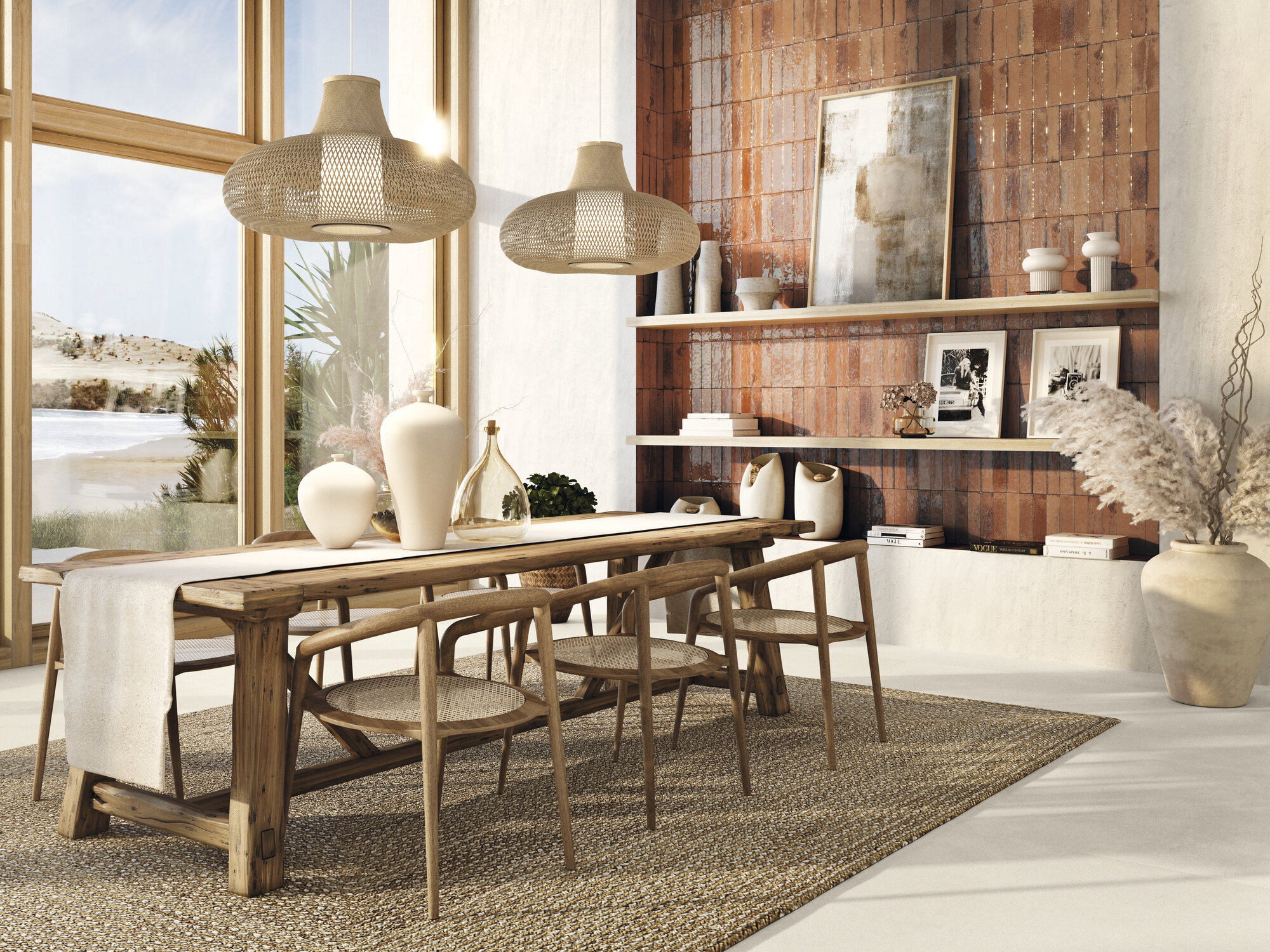
Kitchens have turned into living spaces, and the materials followed: less laboratory, more warmth. Terracotta kitchen tiles deliver exactly that shift. Their orange-red earth tones make the room feel welcoming before a single meal is cooked, and their slight tonal variation gives the floor a lived-in depth that flat surfaces cannot imitate.
They are also forgiving in the most practical sense: crumbs, footprints and the small chaos of cooking simply disappear into the warm tone.
The floor is where terracotta faces its hardest exam: oil splashes, dropped sauces, chair legs and constant traffic. Natural clay struggles here, because its porous surface drinks the first olive oil spill and asks for resealing every season.
Terracotta-look porcelain passes the exam without studying. The surface is non-porous, so grease and wine wipe off; it tolerates every ordinary cleaner; it works over underfloor heating; and it comes in formats the old kiln never dreamed of, from classic squares to large pieces that calm the surface for contemporary kitchens. That is the spirit of Argillae, whose Terra and Coral shades draw their colour from the clay itself.
One planning tip: in open-plan homes, running the same terracotta floor from the kitchen into the dining area ties the two spaces together and makes both feel larger.
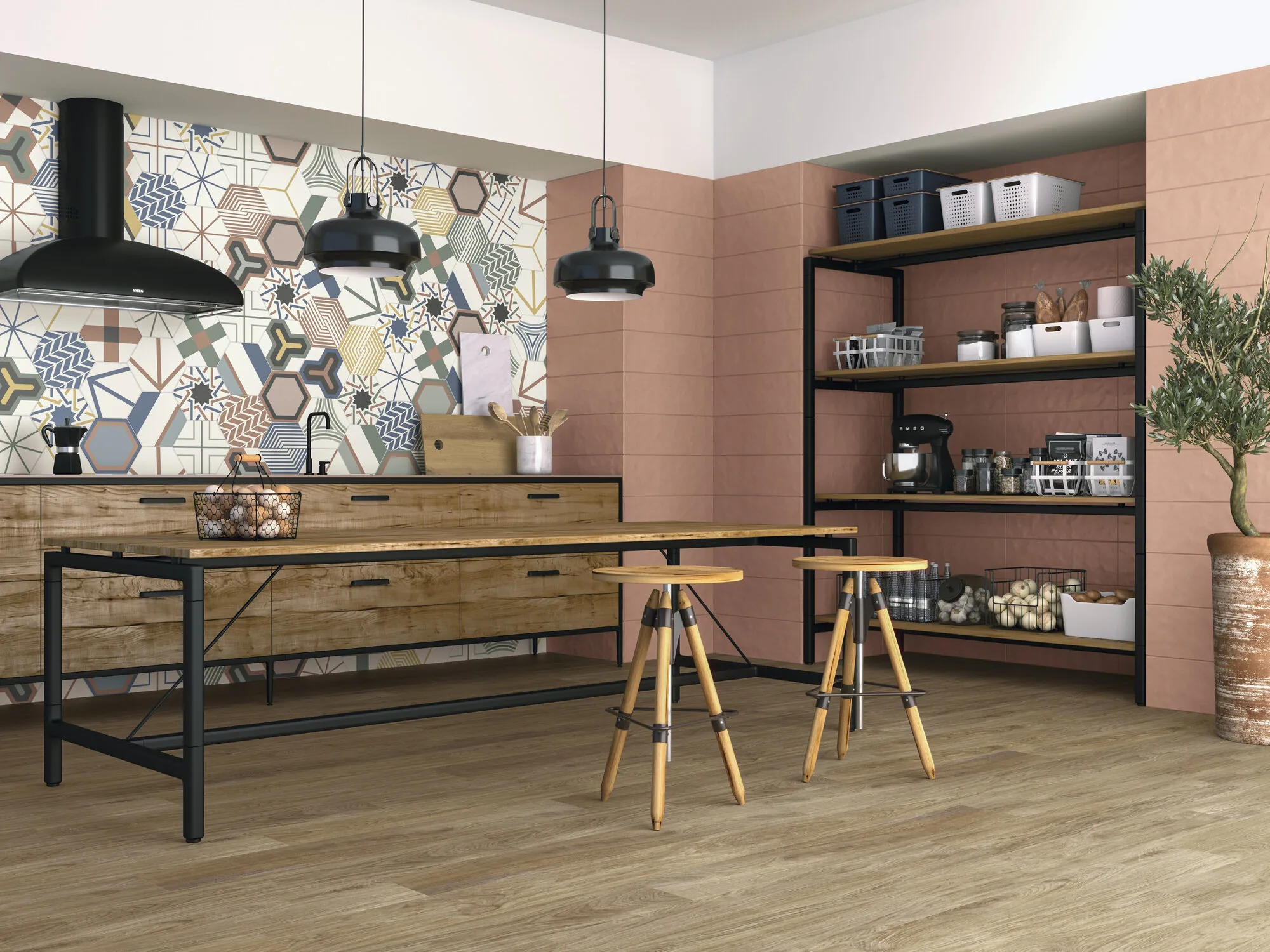
The format decides how traditional or contemporary the same terracotta reads. The classic square, laid straight or on the diagonal, is the farmhouse memory everyone carries; hexagons add a soft geometry that suits both rustic and modern rooms; and rectangular pieces in a herringbone pattern give the floor movement without changing its colour.
At the other end, large-format pieces stretch the clay into calm, almost seamless surfaces, the version that works best in minimalist kitchens where the warmth should whisper rather than sing.
Grout deserves a decision too: a tone-on-tone joint makes the floor read as one piece, while a slightly darker earth grout draws the grid and celebrates the pattern. Keep the joints thin either way; wide pale grout lines are what made old terracotta floors look tired.
Terracotta is not a single orange. The palette runs from pale, sandy versions that behave almost like a warm neutral to deep reds and browns with real presence.
In small or darker kitchens, the lighter tones keep the room airy while still delivering the warmth; in bright, generous spaces, the deeper shades anchor the room and make white cabinets look crisper by contrast. If you hesitate between two tones, take the lighter one on the floor and save the deeper one for the backsplash, where intensity costs nothing.
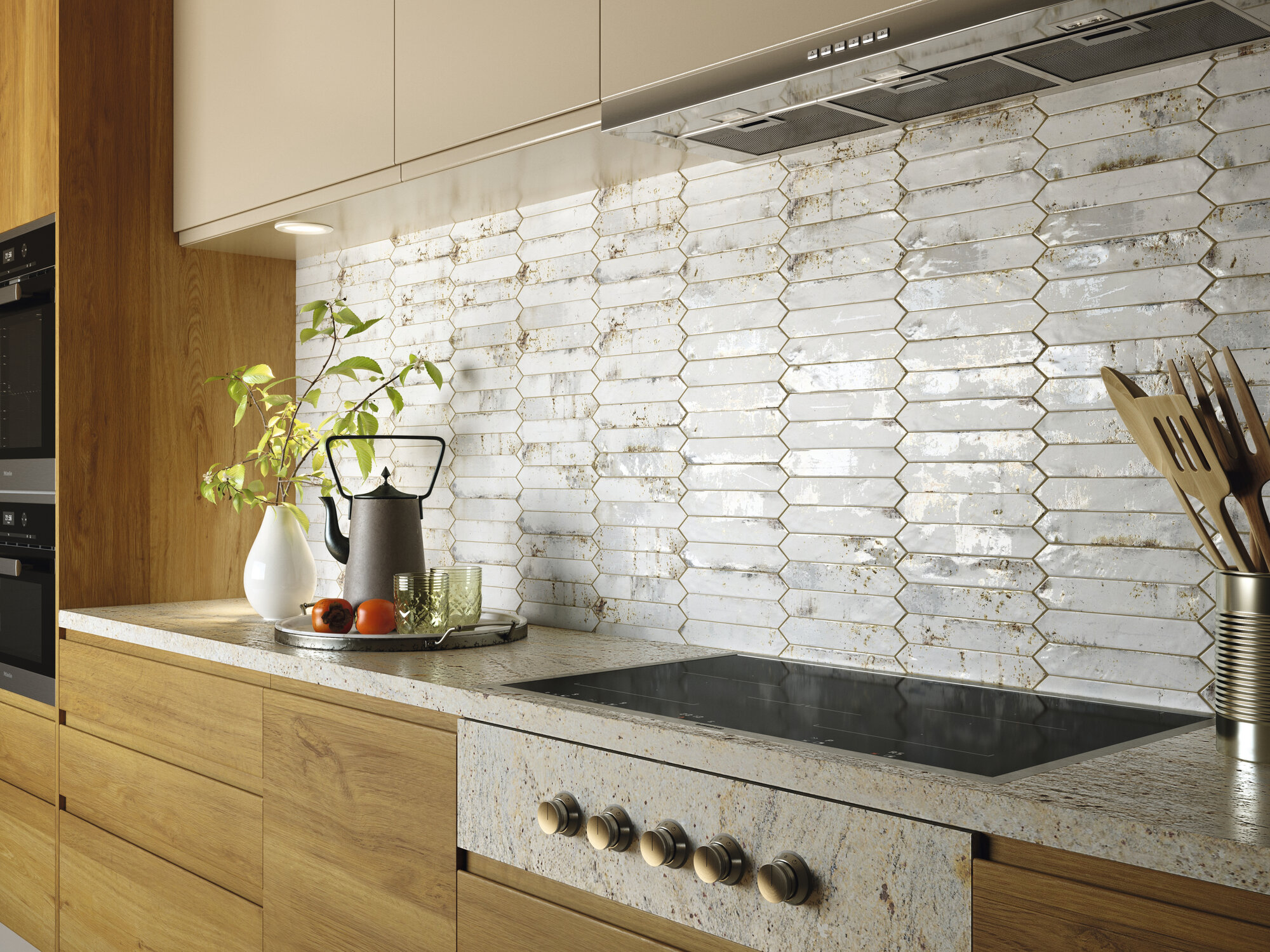
The terracotta backsplash is the fast lane to the look: a small surface, maximum warmth, and in porcelain it shrugs off the heat and grease behind the hob that natural clay could never face.
For walls, glazed terracotta pieces add shine and rhythm. The handcrafted glazes of Grunge, with their worn, artisan character, turn a simple splashback into the personality of the room, and the warm palette of Stay shows how far terracotta walls can go beyond the floor.
Here is the entire maintenance routine of the porcelain version: sweep or vacuum, mop with water and a neutral cleaner, done.
No waxes, no linseed oil, no annual sealing appointments, none of the rituals the natural clay demands.
Grease behind the hob wipes off the glazed surfaces with a regular degreaser, and the floor tolerates bleach-based cleaners when the occasion calls for them.
The only habit worth keeping is the one every tiled floor appreciates: felt pads under chair legs and a doormat at the terrace door. With that, the floor you install for the warmth will still look newly laid when the kitchen around it gets its next renovation.
The natural clay does, regularly and forever. The porcelain version never does; routine mopping is the whole maintenance plan.
Porcelain terracotta comes in finishes with reliable grip for wet zones, something worth specifying near sinks and in kitchens that open to a terrace.
Quite the opposite: the return of warm, natural palettes has made it one of the most requested looks in current kitchen projects, now in formats and finishes that read fully contemporary.
A terracotta kitchen floor turns the hardest-working room into the most welcoming one, and in porcelain it does so without asking anything in return. Explore Argillae and Grunge, and if you want the full story of the material, from its history to every room it fits, our guide to terracotta tiles covers it all.




 Return