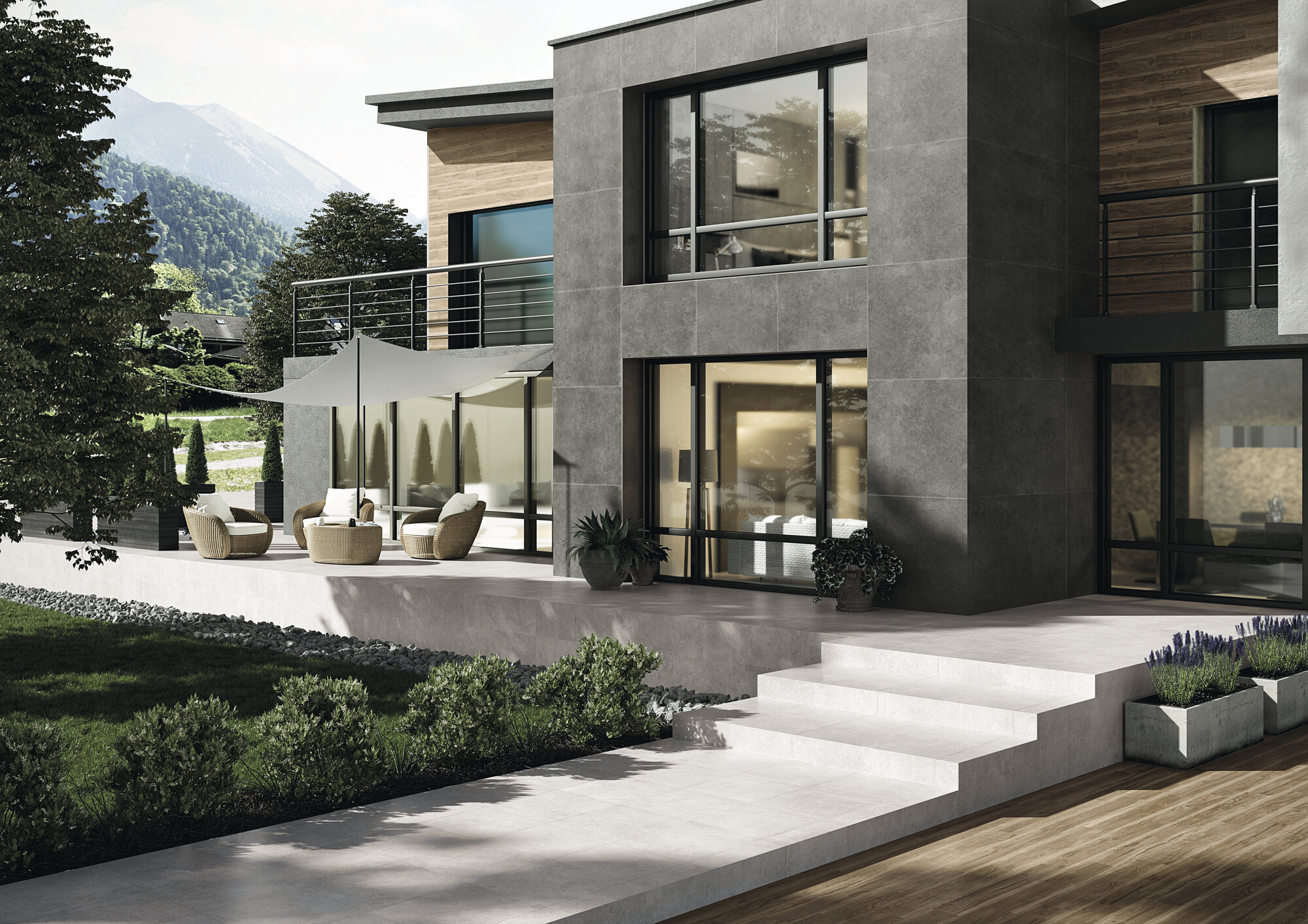
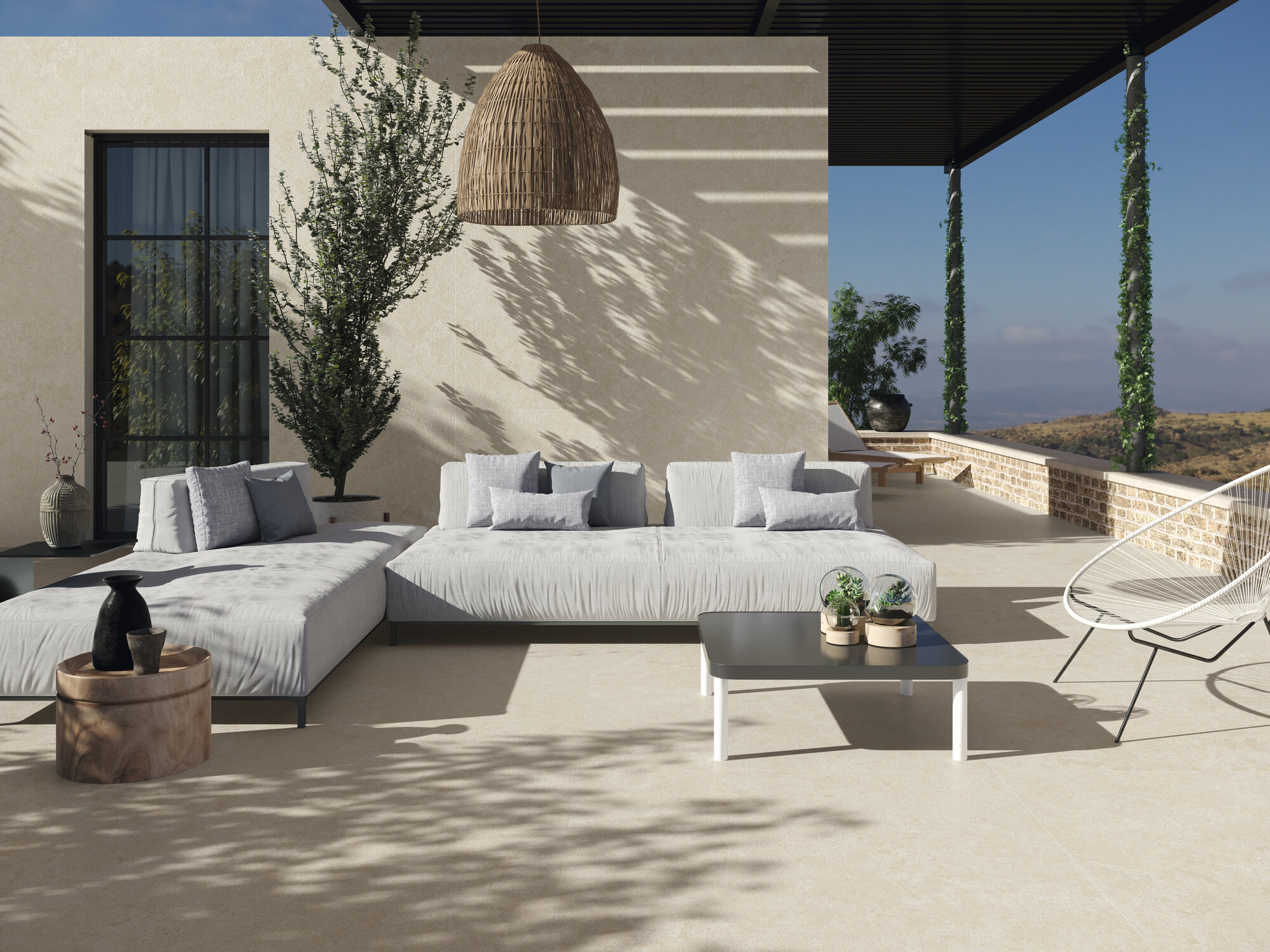
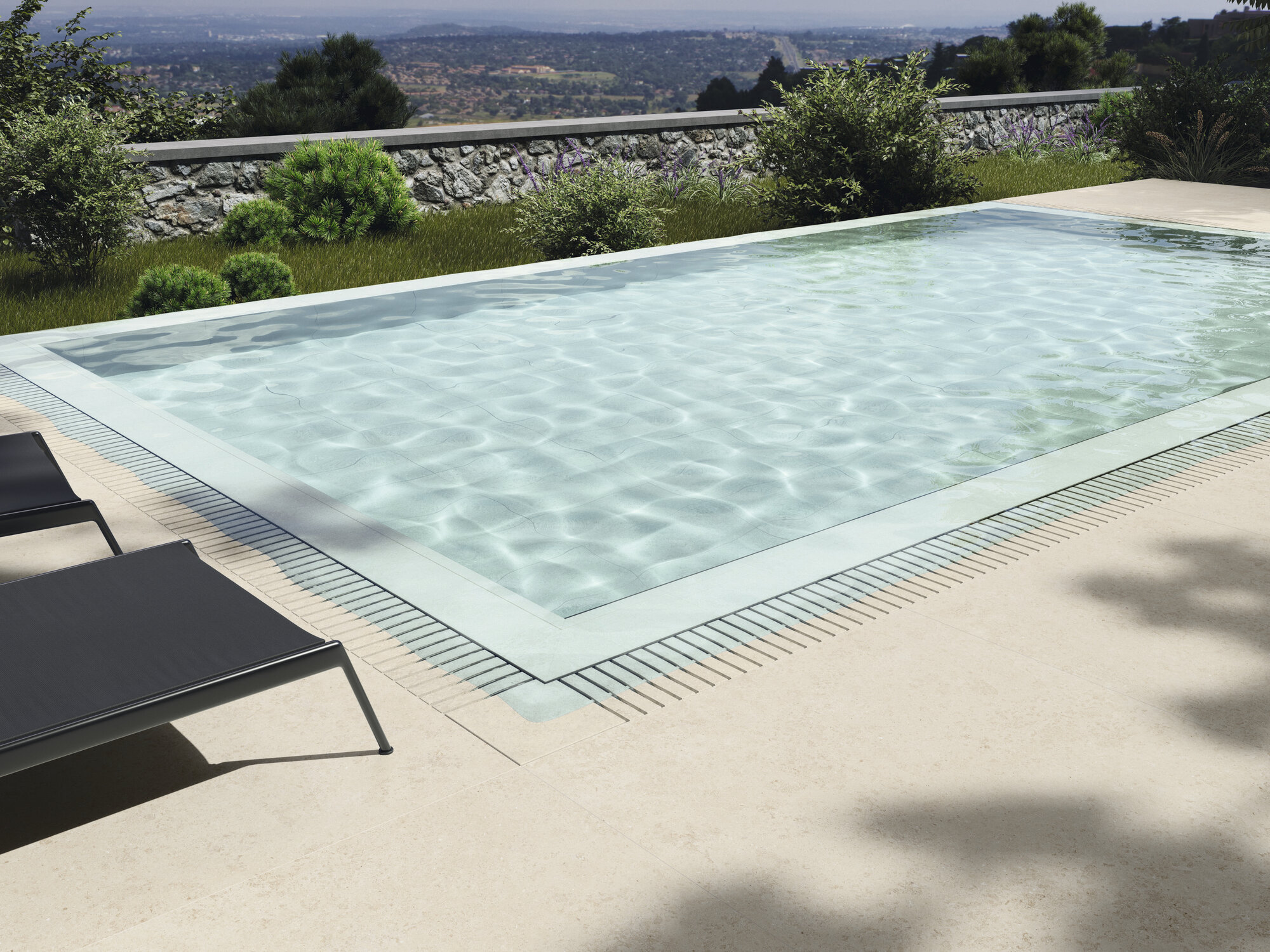
Stone-effect cladding has become one of the most requested solutions in exterior construction and decoration projects. Its ability to combine aesthetics, durability, and easy maintenance makes it an ideal option for those who want to transform facades with a natural and sophisticated finish. In this guide we cover why it works so well on exterior walls, which types of stone you can choose from, how it is installed, and the trends defining stone facades today.
Natural stone has always been associated with robustness and timeless elegance. However, its high cost and installation complexity have led many to opt for more practical alternatives. Stone-effect wall cladding offers the same appearance as real stone, but with the advantage of being lighter, easier to install, and much more affordable. That is why more and more houses with stone cladding actually wear porcelain: the eye reads stone, the wall enjoys ceramic performance.
Choosing a stone-effect exterior cladding is not just an aesthetic choice, but also a practical and functional one. Its main benefits include:
One of the pleasures of stone-effect porcelain is choosing which stone your facade will speak. Each reading has its own character:
Light readings visually enlarge the house and bounce sunlight; dark readings anchor it and highlight architectural volumes. Both age gracefully, because porcelain keeps its color where natural stone weathers.
Stone cladding on a facade, also called stone veneer, is installed in two main ways. The traditional method bonds the porcelain pieces directly to the wall with a cement-based adhesive, just like a high-performance exterior tiling job. The contemporary alternative is the ventilated facade: the pieces hang on a light metal substructure, leaving an air chamber that improves thermal insulation and keeps the wall dry.
For both systems, large-format rectified pieces speed up installation and minimize joints, and the reduced weight of porcelain compared with real stone simplifies the structural requirements. The result is a facade that looks hand-built from quarry stone and behaves like modern engineering.
Although most commonly used on facades, stone-effect wall cladding is also used on perimeter walls, house entrances, terraces, and even interiors seeking a distinctive decorative touch. This type of cladding has multiple applications:
In residential projects, this material adds aesthetic value and reinforces the property’s character. In commercial or office spaces, it conveys professionalism and solidity.
Today, combining stone-effect exterior tiles with elements like wood, metal, or glass is a popular trend. This mix of materials achieves a perfect balance between modern and traditional, resulting in unique and attractive facades.
In the field of architectural design, the latest trends favor the combination of materials:
Considerably. Porcelain avoids the quarrying, cutting and heavy transport costs of real stone, and its lighter weight reduces both the structural demands and the installation hours. The visual result is comparable; the budget and timeline are not.
Porcelain stoneware is frost-proof, UV-stable and non-absorbent, so a properly installed facade keeps its color and texture for decades with no sealing or special treatments, just occasional cleaning with water and mild soap.
Yes, and it is one of the most effective tricks in contemporary design: running the same stone reading from the facade or terrace into the living room creates a seamless transition that makes both spaces feel larger.
Stone-effect tiles are the perfect solution for those looking to transform their facade without sacrificing durability or design. Thanks to their resistance, low maintenance, and wide variety of finishes, they have become one of the most popular choices for both residential and commercial projects.
Whether it’s to refresh the look of a home, enhance the aesthetics of a business premises, or add value to a building, stone-effect exterior cladding offers results that combine the best of tradition with innovation.




 Return