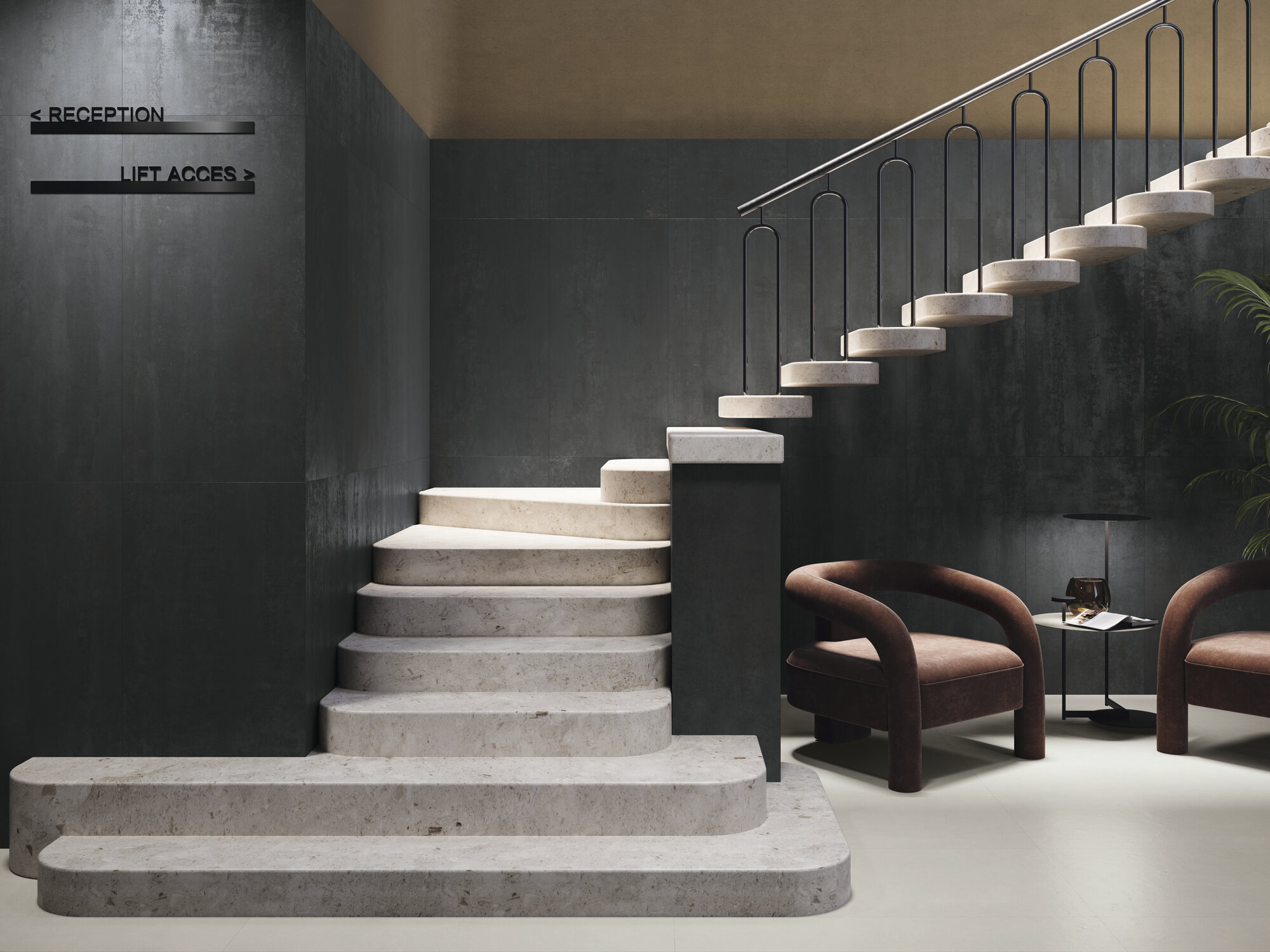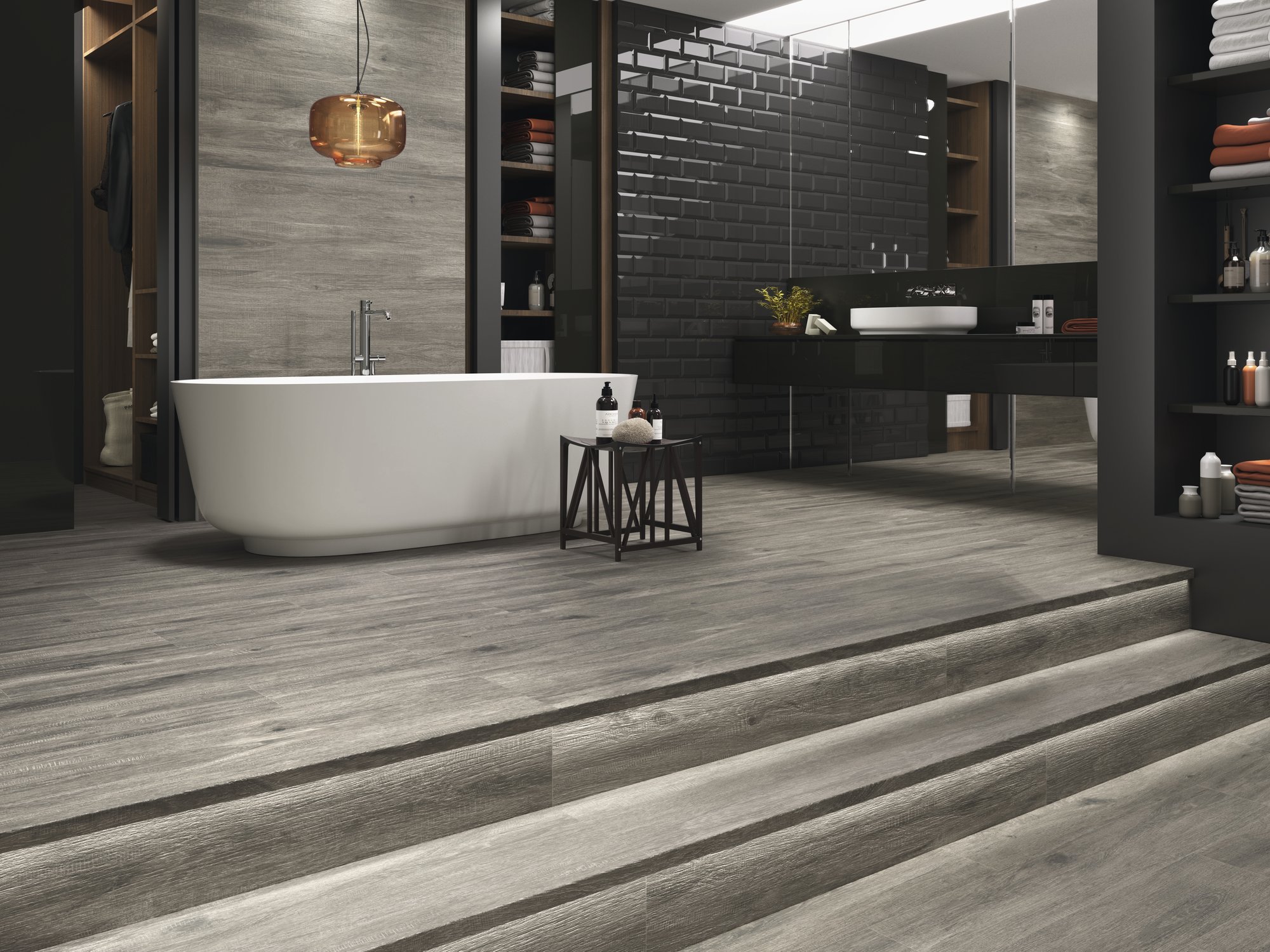
Interior staircases serve a key structural function in any home or building, but they can also become a striking design element. The covering we choose for them not only influences the overall aesthetics of the space, but also determines fundamental aspects such as safety, comfort, and ease of maintenance.
Among the various options available, tiles have established themselves as one of the most comprehensive alternatives. Durable, versatile, and increasingly sophisticated, interior tiles allow staircases to become a centerpiece of the interior design. In this guide we cover whether stairs can and should be tiled, which types of tile work best on steps, and how to choose a design that is as safe as it is striking.
Yes, and it is one of the most reliable ways to finish them. Stairs can be tiled directly over a sound concrete or masonry structure, using the same adhesives and techniques as any quality floor installation. Each step is resolved with two pieces, the tread (the horizontal surface you step on) and the riser (the vertical face), cut to size or supplied as purpose-made step pieces.
The only real requirements are a stable base without loose material, a tile with the right technical characteristics for foot traffic, and careful attention to the edge of each tread, which is where both wear and safety concentrate. With those three covered, a tiled staircase will outlast practically any other finish in the house.
Unlike other materials such as wood or carpet, interior tiles offer specific advantages that make them an ideal choice for stairs, especially indoors:
Thanks to these qualities, these tiles allow you to combine design and functionality without compromising either aspect.
This is the question behind most tiling projects, and the honest answer is: as safe as the tile you choose. A polished, glossy tile on a staircase is a bad idea; a matte or textured porcelain with a slip resistance rating is one of the safest floors you can walk on, indoors or out.
Four decisions make a tiled staircase safe in practice:
With these covered, tile stairs are not only safe but safer over time than wood (which polishes with wear) or carpet (which loosens and frays).
While the choice depends on the project’s style, the following types of tiles stand out for their technical and aesthetic suitability for interior stairs:
If you have to choose blind, technical porcelain in a matte finish is the safest bet: it offers the highest wear resistance of the family, accepts anti-slip treatments, and exists in every effect, from stone to wood to cement, so the aesthetic decision stays completely open.
When selecting the ideal tile for an interior staircase, it’s important to consider both aesthetics and safety. In terms of design, the most common approach is to seek coherence with the rest of the space: a staircase that flows naturally with the adjacent flooring, but that can also stand out if desired.
Matte or textured finishes are an excellent option, as they reduce the risk of slipping without sacrificing visual appeal. Furthermore, it’s increasingly common to find tiles with specific anti-slip treatments that don’t compromise on style. Another growing trend is the use of tiles inspired by natural materials, such as stone-effect tiles, wood-effect ceramics, or cement-effect tiles, achieving an elegant and contemporary look with much simpler maintenance.
As for colour, mid tones and stone greys are the most forgiving on steps, hiding dust and wear marks between cleanings; very dark and very pale tiles both show daily life sooner. In modern staircases, rectified porcelain tiles, with perfectly defined edges, allow for more precise installation and a clean aesthetic. For staircases with a more traditional or rustic design, glazed tiles with handcrafted finishes, irregular edges, or an aged look can add warmth and character.
Yes, especially on stairs. Even indoors, safety is key. It’s advisable to choose models with a slip-resistant rating (for example, R10 or higher) to prevent accidents.
In many cases, yes. In fact, using the same tile on the floor and stairs helps create visual continuity. However, if it’s a very smooth or glossy tile, it’s best to opt for a slip-resistant version on the treads.
There are specific solutions such as treads with rounded edges, aluminum moldings, or special pieces with integrated edges. It all depends on the desired design and the type of traffic the staircase will receive.
Ceramic and porcelain tiles are very easy to maintain. Regular cleaning with water and a mild detergent is sufficient. In the case of tiles with a texture or rough finish, it is advisable to do deeper cleanings periodically.
Choosing the right tiles for an interior staircase is a decision that combines technical and aesthetic considerations. It’s not just about selecting a beautiful design, but also about ensuring safety, resistance to wear and tear, and coherence with the rest of the space. Today’s tiles offer versatile, modern, and durable solutions that adapt to any architectural and decorative style.
At APE Grupo, we help you find the perfect tile for your stairs. We have a wide catalog of products selected for their quality and design, as well as an expert team ready to advise you so that each step becomes a statement of style and functionality. Discover our collections.




 Return