Large-format ceramics have become one of the most in-demand solutions in contemporary architecture and interior design.
Their ability to create continuous surfaces, reduce grout lines and deliver a clean, sophisticated aesthetic makes them a strategic option for both residential and professional projects.
In this guide, we analyze what large-format ceramics are, their advantages, where they can be applied and when it makes sense to choose them over other materials.
Large-format ceramics are considered those that exceed the traditional dimensions of standard tiles. We typically refer to large-format ceramic pieces starting from sizes such as:
These dimensions allow for fewer grout lines and create a much more uniform visual surface.
Large-format ceramic tiles can be used for both flooring and wall coverings, and even for technical applications such as ventilated façades or furniture.
When we talk about large-format ceramic flooring, the benefits are not only aesthetic.
Fewer grout lines mean a cleaner and more sophisticated surface. This creates a greater sense of spaciousness, especially in open-plan spaces.
Large-format ceramic flooring helps visually enlarge the room by reducing visual interruptions.
As porcelain, it retains all the technical properties of the material: resistance to heavy traffic, durability and easy maintenance.
Large-format ceramic pieces are available in multiple finishes:
This allows them to adapt to contemporary, minimalist or more classic styles.
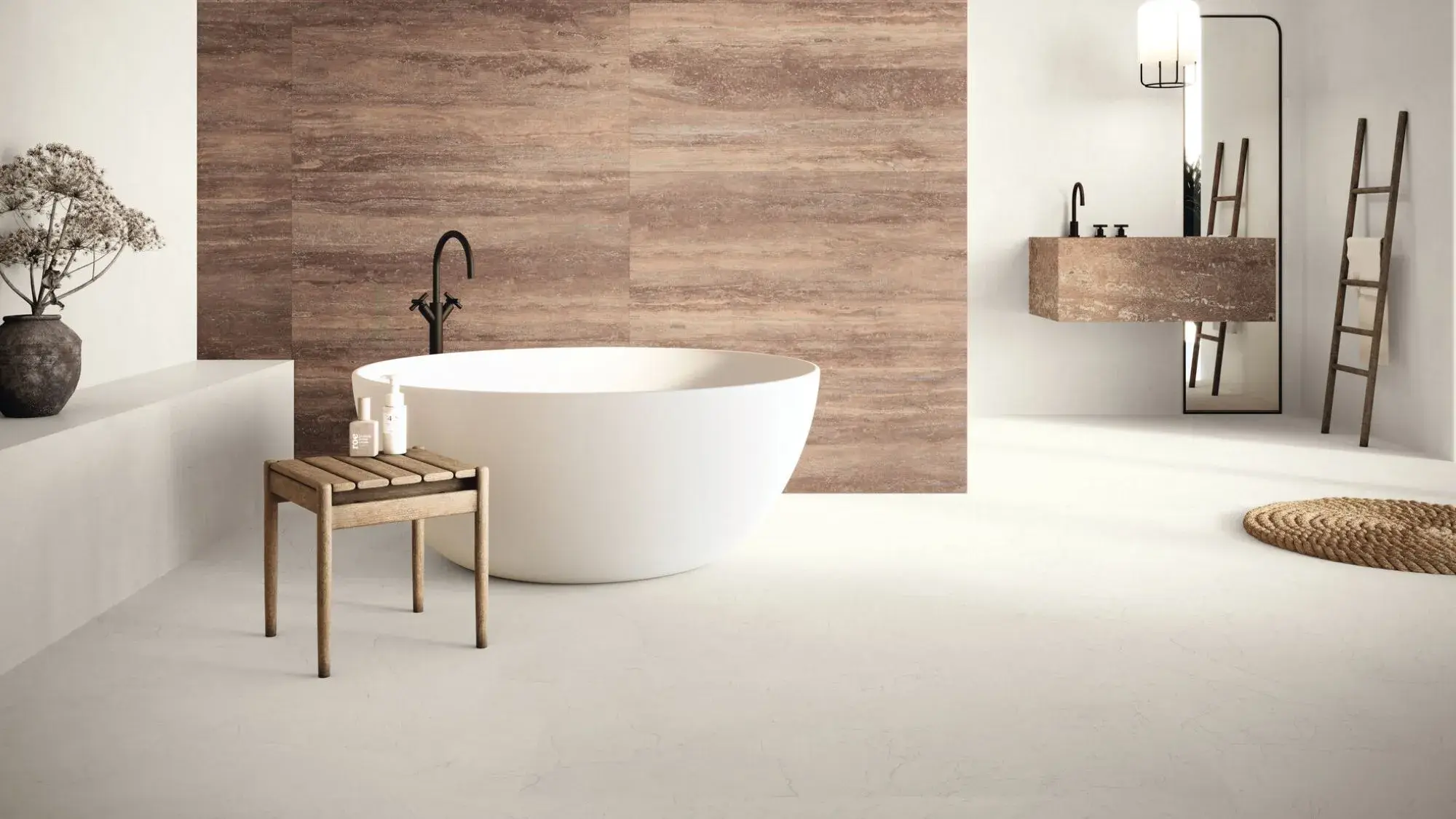
It is ideal for:
Its use as large-format ceramic flooring makes it possible to create continuous surfaces with a strong architectural impact.
Large-format ceramic pieces are also used as vertical wall cladding in:
On walls, the continuity effect is even more evident.

Within this segment, technological development has made it possible to push performance even further.
One example is XLINING, APE Grupo’s brand specialized in large-format porcelain.
These solutions offer additional advantages:
Despite its reduced thickness, it maintains the strength and durability typical of porcelain, making it suitable for both flooring and wall coverings, ventilated façades or even furniture.
Large format is also especially valued in architectural specification projects due to its versatility and ability to adapt to multiple applications.
Large-format ceramics are recommended when:
It may not be the best option in very small spaces or in areas with multiple complex technical intersections where excessive cutting would be required.
Before installing large-format ceramic tiles, it is important to consider:
Proper planning is key to ensuring the final result.
Choosing large-format ceramic tiles should not be based solely on aesthetics, but on a holistic view of the project.
Their integration requires technical planning, proper substrate preparation and precise execution, but the result more than makes up for the effort.
In residential projects, large-format ceramic flooring helps create more spacious and visually connected spaces. In commercial or contract environments, large-format ceramic flooring provides continuity, resistance and a contemporary image aligned with current architectural standards.
In addition, the development of lighter and more versatile large-format ceramic pieces has expanded their application possibilities, allowing them to be used not only in flooring but also in vertical cladding, façades and integrated construction elements.
Ultimately, choosing large format is a project decision that combines design, technique and long-term performance.
Explore large-format ceramic and technical porcelain solutions developed for demanding architectural projects.




 Return